
Field guide / Method
Methodology · night field register
How the breeding results are computed
Tamedex does not ship a third-party pre-computed combination table. Every result is derived from first principles — so it can be explained, versioned, illustrated and tested. Try any pairing below, then read how the number is produced.
01 · breeding notes
Pair the records.
Pair two records to read the route, or reverse-search a target’s cleanest lineage. New here? Read the setup guide →
Choose two records
Order does not affect the childinterface study · A + B and B + A give the same child · computed in-browser from Tamedex’s verified data.
The formula, illustrated
Each Pal has a hidden breeding rank (its combi rank). For an ordinary pairing the child rank is the rounded midpoint of the two parents:
The child is the breeding-eligible Pal whose combi rank sits closest to that midpoint — not the average of the two Pals themselves:
 Parent ALifmunk No. 004 · Grass
 Parent BFuack No. 005 · Water
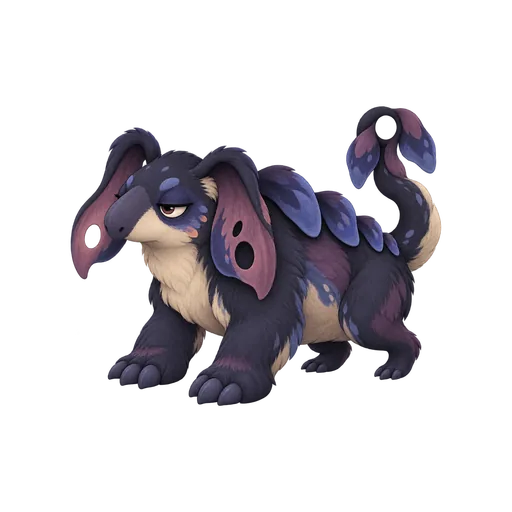 closest rank · resultDepresso No. 016 · Dark
Worked example — a real pairing from the verified table. Parent order never changes the child.
The pipeline
Every pairing runs through the same deterministic steps:
Read the ranks
Look up each parent’s hidden combi rank.
Rounded midpoint
Apply floor((A+B+1)/2) to get the target rank.
Nearest & tie-break
Pick the closest eligible Pal; break exact ties by a calibrated priority.
Special override
Unique combinations replace the formula result entirely.
Because the child is a deterministic function of two ranks, A + B and B + A always give the same child, and the calculator runs entirely in your browser from a small versioned snapshot.
Tie-break calibration
Published combi ranks are rounded to the nearest ten, so many pairings land exactly between two candidates. The real game resolves these with an internal priority order. We learn that order from an independent, game-derived reference and encode it as a per-Pal tie priority — so our table reproduces the game rather than approximating it. Legendaries can be parents in specific special combinations, but are never an ordinary result.
Verification
A golden test runs on every build, so a regression can never ship silently.
How we source & verify
See the sources and IP policy pages for full provenance and artwork boundaries.
How we check game codes
A Roblox game code is listed as active only when the game’s own Roblox page advertises it or two independent outlets list it as active with identical spelling. Codes the sources disagree on are shown as unconfirmed, never as active. We do not redeem codes in-game, every page shows the date it was last checked, and the checks are repeated by hand every week.
Tamedex is an unofficial field register. Facts are sourced and versioned; portraits are original studies, not official artwork.